
Field Guide · Central Valley
Central Valley Commercial
Real Estate: A 2026 Guide
for Private Investors.
A grounded overview of California Central Valley commercial real estate — where multi-family, residential portfolios, and professional buildings are trading, and what disciplined private capital should be watching in Fresno, Visalia, and Bakersfield.
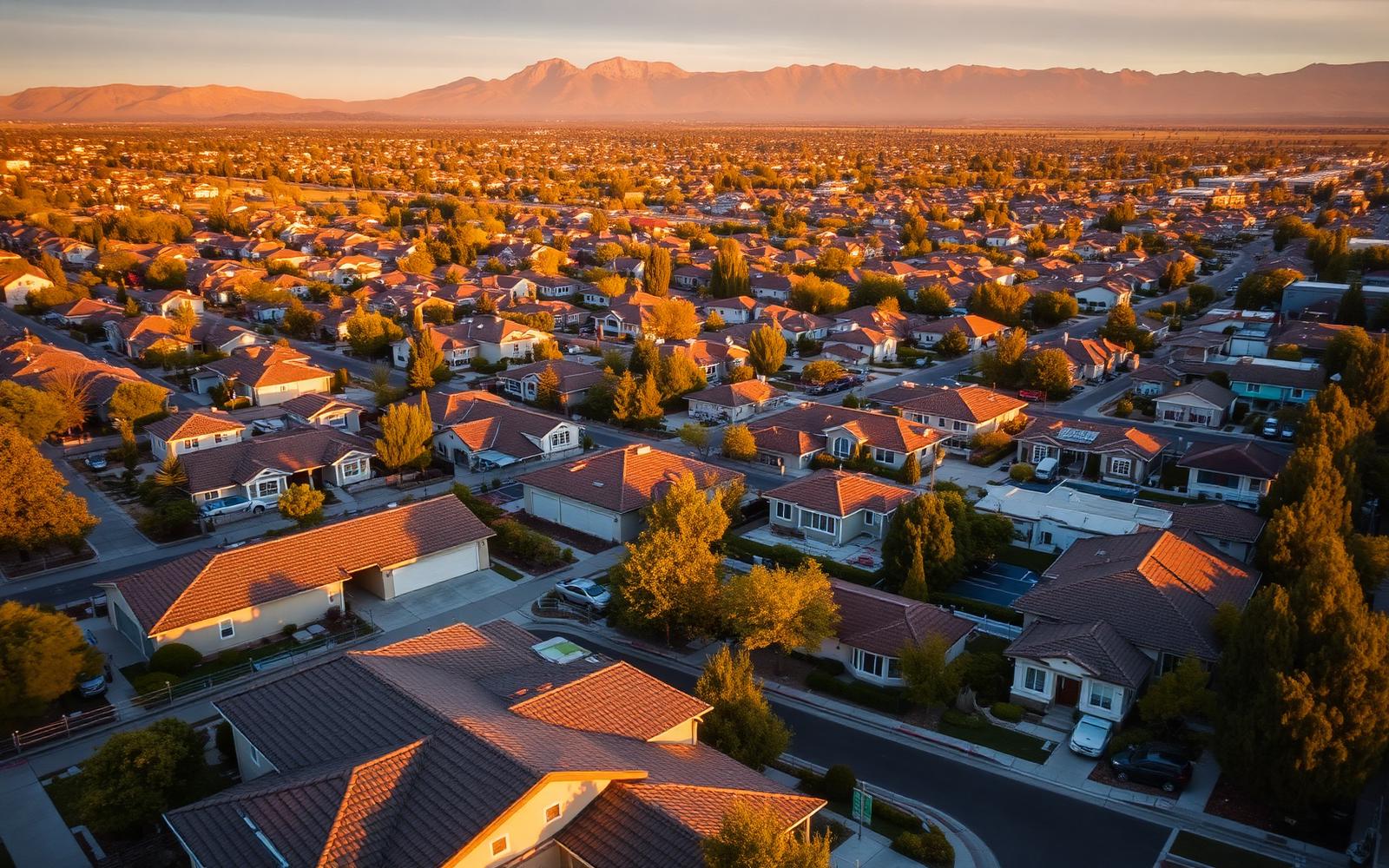
1. Why the Central Valley rewards patient capital
California's Central Valley remains one of the most persistently misunderstood commercial real estate markets in the state. It is less liquid than the coasts, less institutionally covered than the Bay Area or Southern California, and — for private investors with a long horizon — that inefficiency is precisely the opportunity.
The Valley's economy is anchored by agriculture, healthcare, logistics, and higher education, with steadily growing populations in Fresno, Visalia, and Bakersfield. Rents have followed a slower but more stable trajectory than coastal California, and cap rates typically clear 75–150 basis points wider than comparable coastal product. For owners underwriting long-hold cash flow rather than short-cycle exits, that dislocation compounds.
2. Fresno: the Valley's institutional anchor
Fresno is the Valley's largest MSA and the market most likely to attract institutional capital when the debt markets thaw. Multi-family fundamentals have been supported by chronic supply-side friction and steady in-migration from the coasts. Class-B garden and mid-rise product in North and Northeast Fresno has continued to trade — often quietly — at cap rates that still favor owner-operators who can hold through the cycle.
Professional buildings clustered around Community Regional Medical Center and the emerging Cultural Arts District have remained supply-constrained. Medical office in particular trades on tenant credit and lease term, not headline yield; the right basis is what compounds.
3. Visalia & Tulare County: the quiet compounder
Visalia has been one of the Valley's more disciplined growth stories — measured population expansion, a healthy household formation curve, and a downtown that continues to draw professional tenants. For private investors assembling small-cap residential portfolios or acquiring owner-user professional buildings, Visalia's basis remains attractive relative to comparable coastal submarkets.
Off-market flow matters more here than headline pricing. The highest-quality small-cap deals rarely surface on public platforms; they trade through relationships that were built years before the transaction.
4. Bakersfield: value, watched carefully
Bakersfield offers the widest cap-rate spread in the Valley and a diversified employment base — energy, logistics, agriculture, and increasingly healthcare. Investors here are compensated for concentration risk with genuine yield, but underwriting discipline matters more than in any other Valley market. Sub-market selection, tenant quality, and defensible basis separate durable deals from optical yield traps.
5. Multi-family: the durable core
Central Valley multi-family remains our highest-conviction category for private capital seeking durable cash flow. Rent growth has moderated from post-pandemic peaks but continues to track wage growth. Value-add repositioning — thoughtful capex, professional management, and disciplined rent-to-market execution — is still the most reliable path to compounding equity in the region.
6. Professional buildings: undercovered, underpriced
Medical, legal, and owner-occupied office assets in supply-constrained Valley submarkets remain some of the least efficiently priced commercial real estate in California. The right sale-leaseback or long-hold acquisition — anchored by a creditworthy practice — is a genuinely defensible position for private investors.
7. Underwriting discipline is the entire game
Every recommendation we make to a client is anchored in a written thesis, a defensible underwriting model, and a conservative view of exit assumptions. That discipline is quietly the difference between capital that compounds for twenty years and capital that has to be rebuilt after every cycle.
If you are evaluating California commercial real estate — in the Central Valley or elsewhere — we would be glad to compare notes privately.